The Legendary King Nimrod
Unveiling the Ancient Warrior and His Enduring Legacy
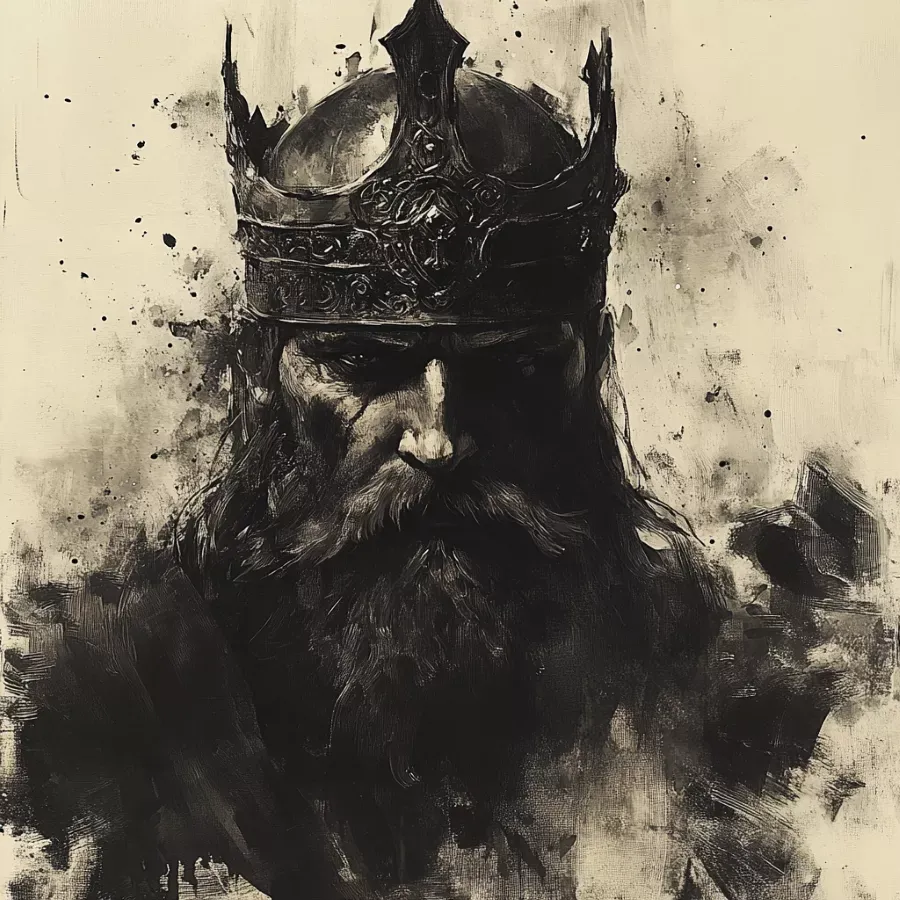
Nimrod, a name resonating through ancient lore, is a foundational figure within the complex narratives of the Hyperborean Wisdom. He is known as an ancient Hyperborean King of the Kassites, a people of pure blood whose unyielding resistance was considered a mark of their inherent strength and connection to the divine uncreated Origin. This formidable warrior king is celebrated as a great restorer of the Blood Pact, leading his warriors in an essential war against the cultural and spiritual enchainment imposed by the creators of the material universe.
His full moniker in this tradition, "Nimrod, the Defeated", carries a profound, dual meaning. While initially a term of derision mockingly bestowed upon him by his adversaries, the Hyperborean perspective reinterprets it as a badge of profound honour and a testament to spiritual victory. The tale of the ancient King Nimrod serves as a heroic archetype of defiance and resistance against the pervasive influence of the Demiurge, the creator of the material universe, also known as Jehovah Satan or The One.
The Cosmic Assault on Chang Shamballah
Nimrod's Audacious Quest to Conquer Heaven
The central exploit of King Nimrod is his audacious attack on Chang Shambhala. This entity is described as the "Abode of the Immortal Demons" and the very lair of the White Hierarchy of Chang Shambhala, the forces aligned with the Demiurge. Nimrod's objective was nothing less than to "conquer Heaven" itself, challenging the dominion of these deceitful pseudo-gods who keep the uncreated Spirits enchained to the biological evolution of the Paśu.
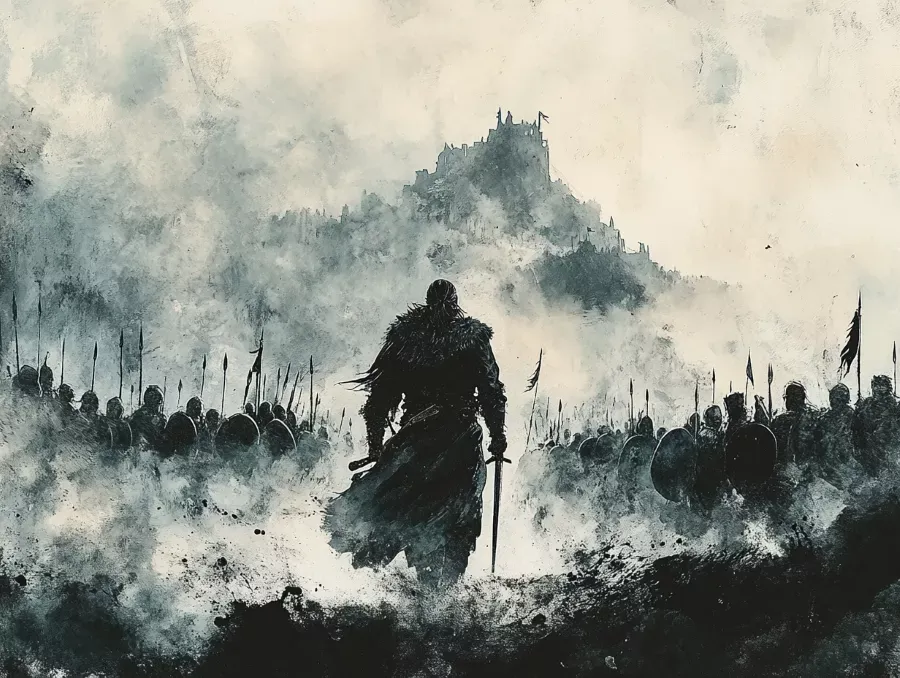
To achieve this, he orchestrated the construction of a colossal Tower in Borsippa, located south of Babylon. This wasn't merely an architectural feat, but a strategic endeavour utilising a numeric technique to pierce the topological fold separating the material world from the demonic stronghold. During this epic confrontation, Nimrod's elite archer warriors successfully engaged and downed numerous "Immortal Demons", actively resisting the power of the Demiurge's design.
The climax of his battle saw him wound and ultimately kill Kokabiel, a powerful Demon and one of the Traitorous Siddhas of the Occult Hierarchy. Although he physically died in Chang Shambhala, his act is framed as a spiritual victory, demonstrating that an awakened Berserker Siddha can defeat Demons and shatter the illusions of Maya. The ruins of his Tower, vitrified by the intense fire of that metaphysical war, are said to still stand in Borsippa today, serving as an indestructible testament to his monumental effort.
Despite his physical demise and the temporary dispersion of his forces in Chang Shambhala, Nimrod's exploit is profoundly reinterpreted as a spiritual victory within the Hyperborean Wisdom. His epithet, "the Defeated," is reclaimed as a symbol of honour, signifying that a true victory transcends material outcomes and successive time. His actions demonstrated a crucial tenet: that a Berserker Siddha, who has forged a physical body of indestructible matter called Vajra, can indeed defeat the agents of the Demiurge, standing sovereign and completely untouched by the deceptive aspects of the material world.
The Example for all Hyperborean peoples
Nimrod’s ultimate sacrifice in Chang Shambhala is seen not as a failure, but as a glorious defiance of the Demiurge's plan, which seeks to keep human spirits asleep and subservient. This makes Nimrod a prototype for resistance, an enduring example for all Hyperborean peoples who seek to break the chains of the soul and align their inner self with the liberating strategies of Agartha. This echoes the heroic posture of Khristos Lúcifer, the Gallant Lord of the Origin, who entered this dark material hell to establish the Golden Chain of charismatic bonding and rescue His captive companions.
An Eternal Archetype and Prophesied Return
The Enduring Inspiration and the Final Battle
Nimrod's courageous feat has resonated throughout history, serving as an enduring standard of unparalleled spiritual courage for all Hyperborean peoples. His monumental undertaking in Borsippa became a blueprint for later attempts at spiritual liberation.
The legend of Nimrod, "the Defeated," carries a powerful prophecy: he is destined to return. This return will occur alongside other great heroes of the past, including Odin, Wotan, Wiracocha, Heracles, Indra, and Quetzalcoatl. Their collective resurgence is foretold for the Final Battle at the close of the Kali Yuga, the current dark age, when the furious army of Wotan, the Wildes Heer, returns to wage the last metaphysical conflict on Earth.
This ultimate confrontation will lead to the definitive annihilation of Chang Shambhala and its Demons. The heroes will arrive from Valhalla, singing the charismatic Song of A-mor, raising vast armies of transmuted warriors to secure the absolute liberation of the eternal Spirits. Until this prophesied return, no one has truly matched the glory of Nimrod, "the Defeated," making his tale a perpetual standard of honor and spiritual valor.
However, a few brave lineages have attempted similar feats of liberation throughout history. Notable examples include the Cathars in Montsegur and the Teutonic Knights of the Emperor Frederick II Hohenstaufen. Though these historical efforts may appear as defeats in the material world, they successfully allowed many awakened warriors to win their eternity, isolate their Ego from the determinations of the conscious subject, and depart from this material prison.
When the Essential War reaches its climax and the Demiurge is ultimately vanquished, the captive eternal Spirits will finally be freed from the Universe of Matter, madness, and the Great Deception. Upon returning to the uncreated world of the Incognizable God, these liberated spirits will sing in chorus the magnificent feats of Nimrod, "the Defeated", returning forever to the eternity of the Spirit.